
Trauma stems from an event, a series of events, or circumstances perceived by an individual as harmful or life-threatening. It can take many forms and is unique to each person, deeply impacting how they think, feel, and interact.
Conducting research with those who have experienced trauma calls for thoughtful, sensitive design and implementation to ensure respect and safety. Creating that sense of security builds trust, helping participants feel more empowered and enabling deeper insight into complex challenges.
For this blog we’ll look at the different elements that make an approach ‘trauma-informed’ and highlight examples of where it’s been applied in our research helping to amplify underrepresented voices.
What being ‘trauma-informed’ actually means
The different types of trauma
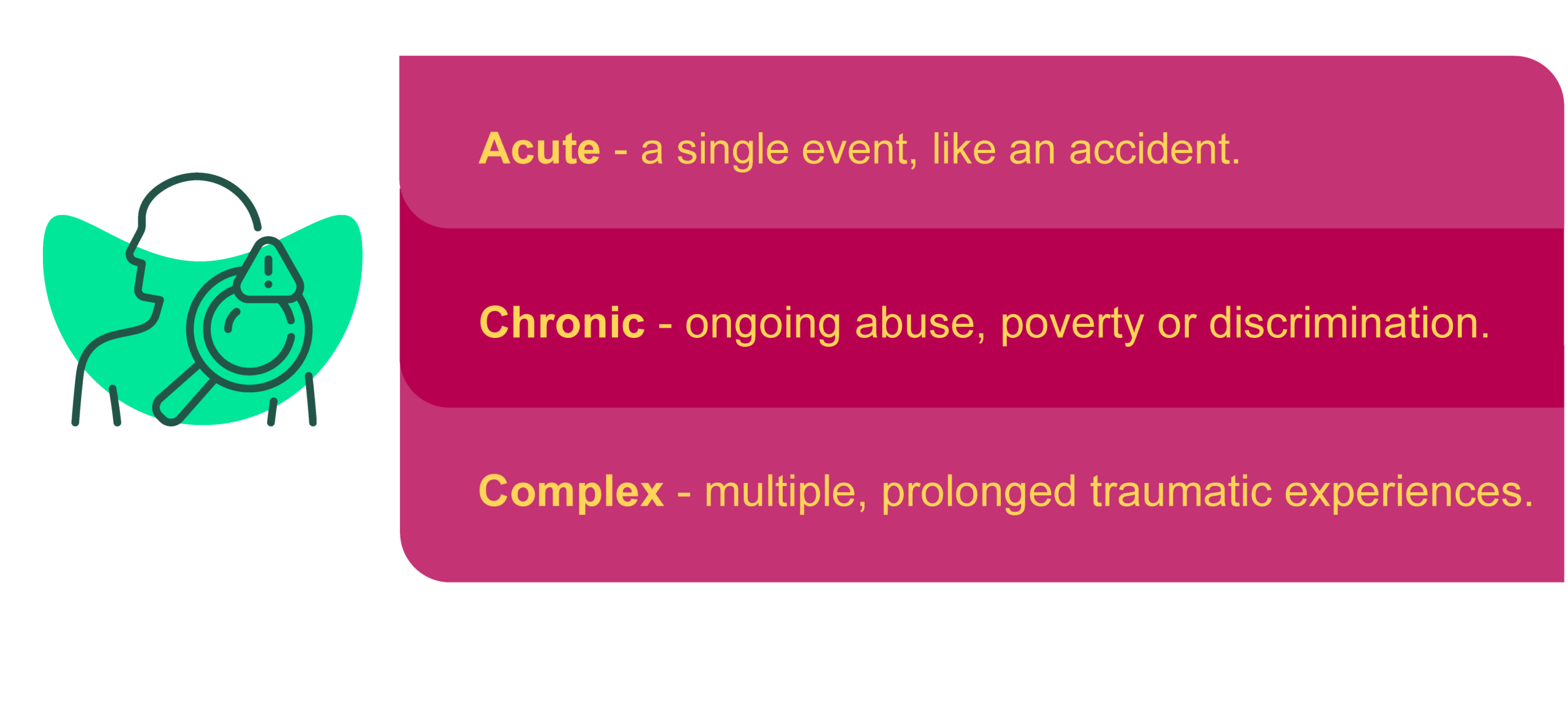
Whilst it’s important to acknowledge trauma varies depending on an individual’s experience, it’s also useful to categorise it into three general types:
Embedding trauma-informed approaches into practice
A trauma-informed approach is built on the foundation of five key areas:
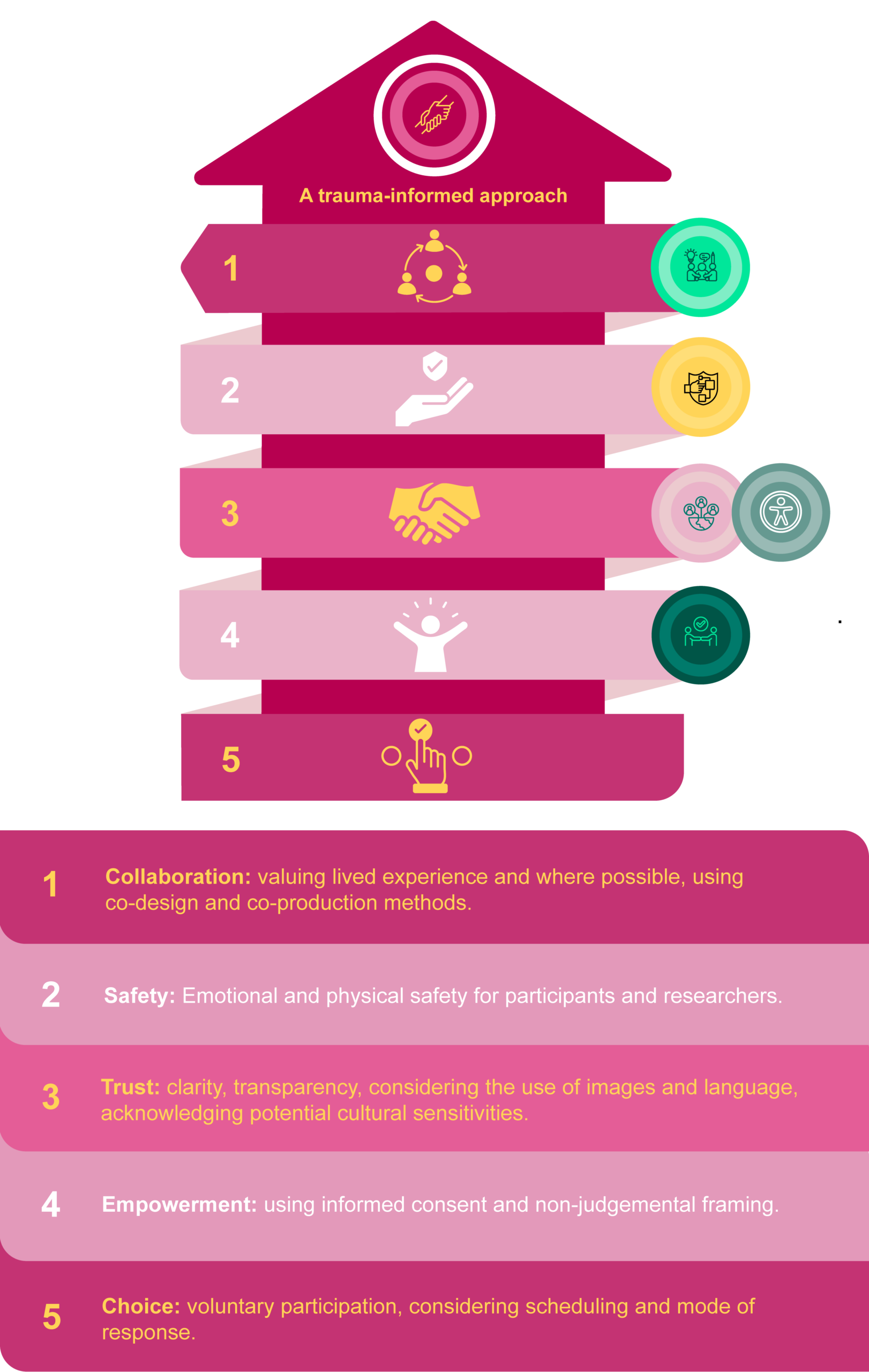
An active, responsive process that considers the type of trauma and follows the five pillars as guidance for sensitive practice throughout every stage, is what defines research as being trauma-informed.
Examples of how we ensured our research was trauma-informed
Here are three projects where we applied these concepts on real-life projects, covering different phases of research:
Advice for recruitment and framing findings
Public Health Scotland
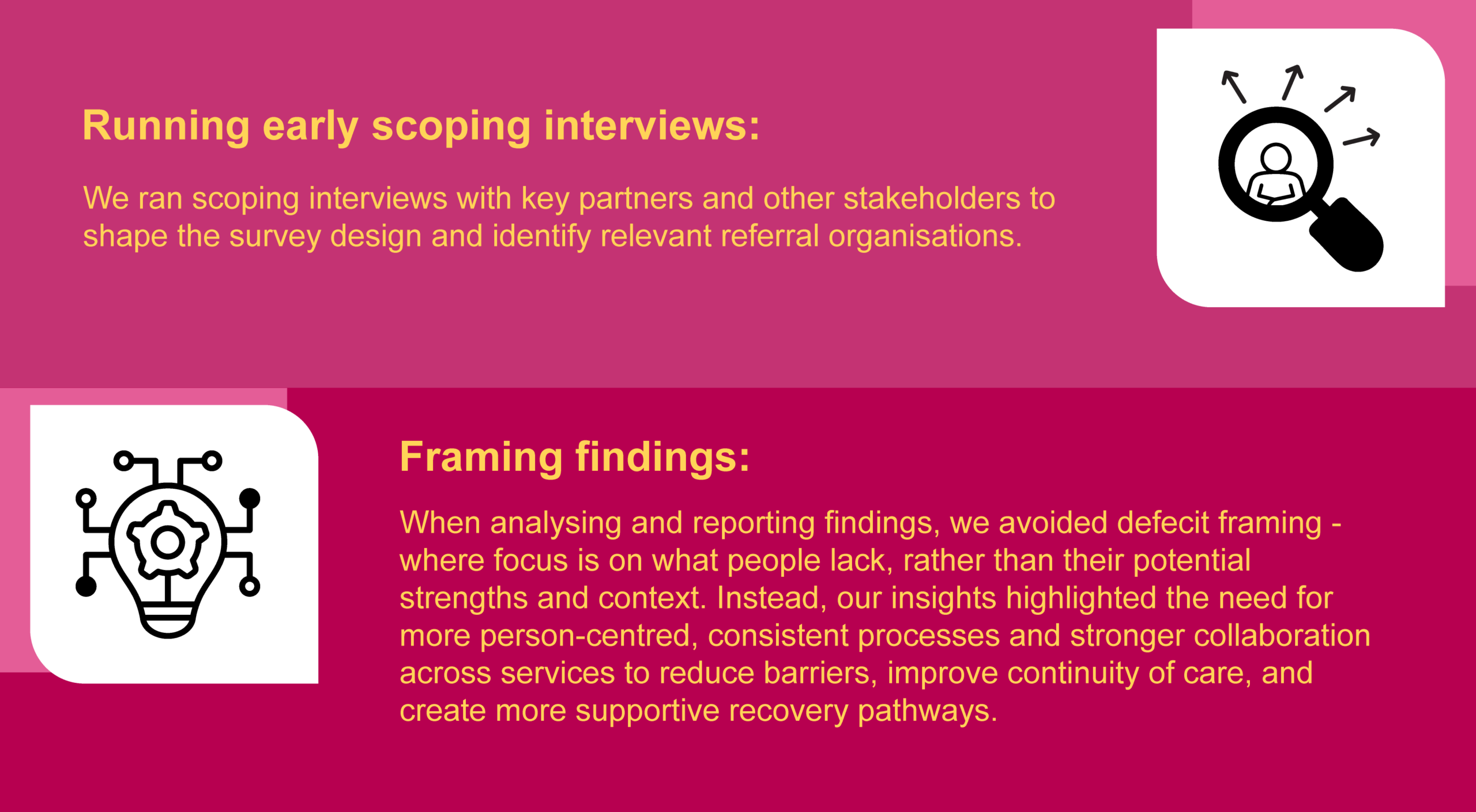
Residential rehabilitation is designed for those experiencing substance dependency to offer person-centred, evidence-led support and care for as long as they need it. A Residential Rehabilitation Programme was launched by the Scottish Government as part of a wider series of interventions to tackle drug-related deaths and harms in Scotland. We were asked to evaluate two strands around the programme, looking at attitudes to programme referral as well as the provision of post-residential rehab support and services. With a sensitive topic of this nature, we ensured our methods were trauma-informed by:
Creating safe spaces and material design
BB4K (Bounce Back 4 Kids)
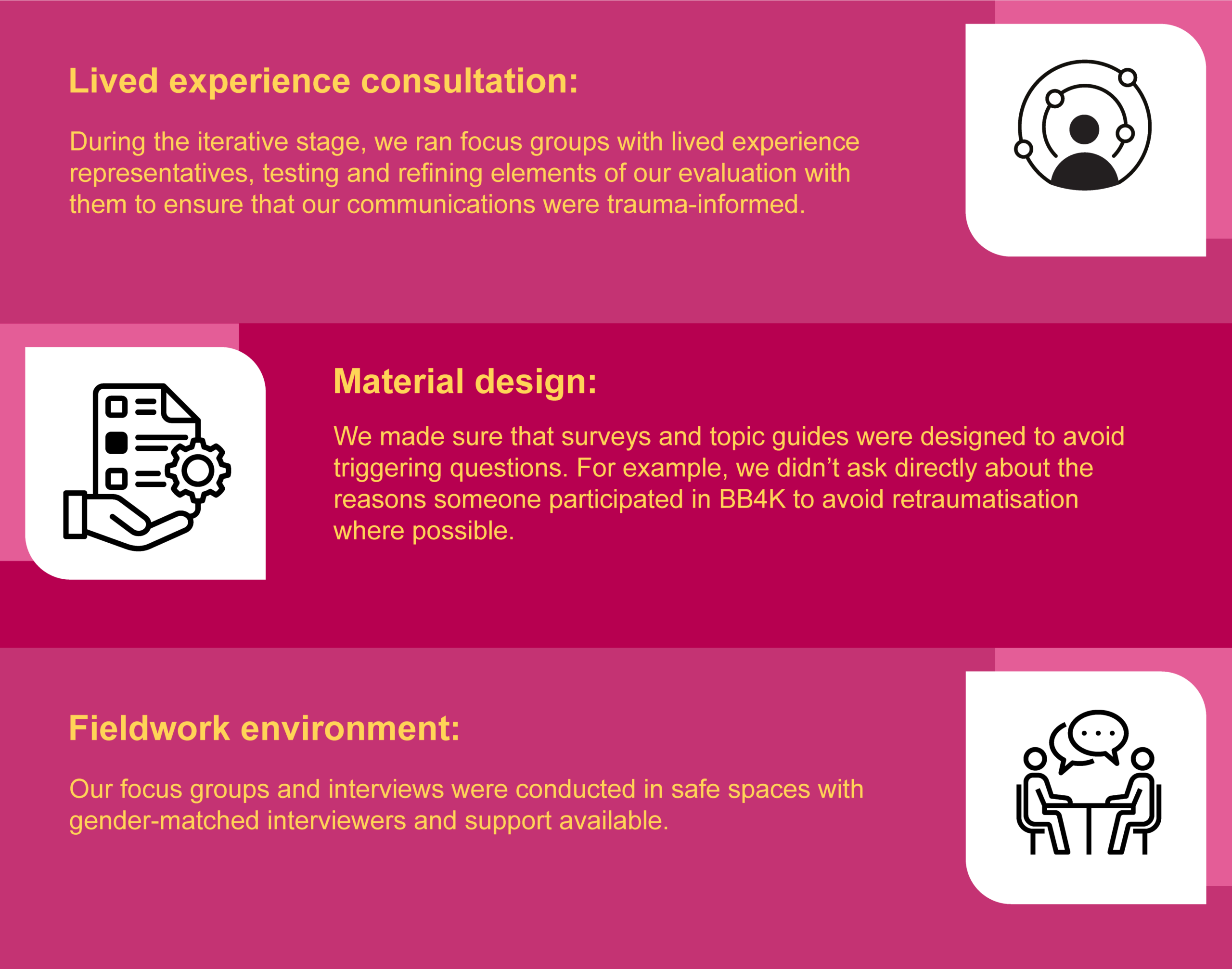
For our evaluation of BB4K, a therapy-informed programme supporting parents and children affected by domestic abuse, we prioritised reducing the risk of re-traumatisation and creating conditions for participants to feel comfortable:
Coming up next
Trauma‑informed research recognises the varied nature of trauma and designs studies that prioritise wellbeing and uses a non-judgemental approach.
Next, we’ll explore our expertise in making research accessible to ensure underrepresented audiences can engage effectively, removing barriers that might exclude people with lived experience, language differences, or additional needs.
You can also check out our previous blog which covers how co-production and co-design is used to bring about more informed approaches and findings.