
Accessible research is essential in ensuring that people are able to participate fully, regardless of their background or circumstances. This includes physical, systematic, behavioural and environmental barriers.
It not only benefits those participating, by helping them feel respected and understood, but it also strengthens the insight. Participants taking part more meaningfully means the evidence base is stronger, as it can more accurately reflect the lived experiences and needs of the communities the research is intended to serve.
What makes research accessible?
Inclusion from the outset
Accessible research starts at the design stage. This means thinking carefully about who needs to be included, whether the sampling approach reaches them, and whether any groups are unintentionally excluded by decisions about method, timing or mode.
For instance, since digital literacy can vary across populations. A wide variety of channels for communication, e.g. post, leaflets in public settings and SMS/phone calls also need to be considered.
Removing barriers to participation
Material, methods and recruitment can all potentially create barriers to participation. We as researchers need to be cognizant of communication, cognitive, sensory or situational requirements, making sure they’re embedded within the data collection methods we plan to use.
Barriers are often best identified by the people directly affected by them. This is where co‑production and co-design, as we’ve explored previously in this blog series, can help us to work directly with participants to inform our approach, resulting in improved engagement.
Diversity, transparency and responsibility
The importance of accessibility continues through to analysis and reporting. Findings must be usable and meaningful for different audiences. Our commitment is to use clear, non‑technical language, explain methods and limitations openly, and present findings in ways that supports understanding rather than assuming specialist knowledge.
Creating a number of audience-specific outputs is a good example. Visual formats like infographics make findings clear and engaging to the general public, whilst detailed practice learning notes can help practitioners understand the implications of our findings for their work.
A continuous process
It’s important to remember that good practice is ongoing and iterative. At IFF we’re always looking to adapt our methods and outputs based on participant feedback and new evidence or information. Doing this is key to ensuring future waves or projects remain accessible.
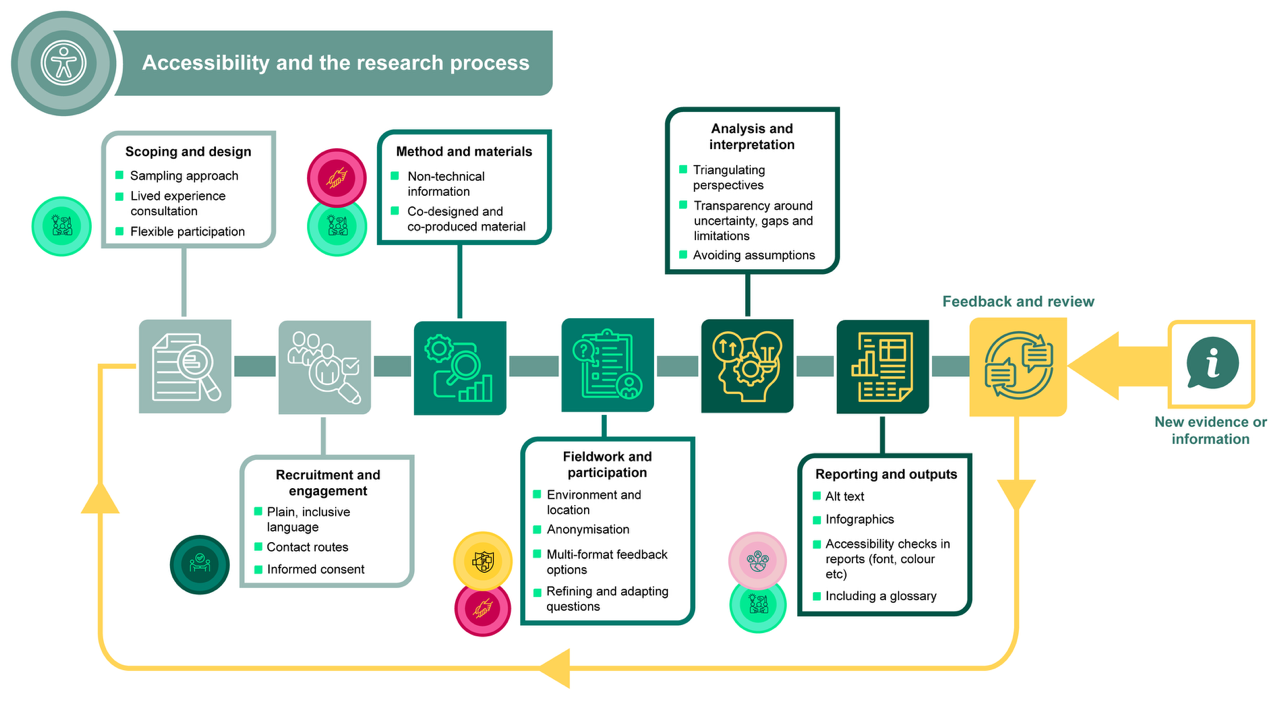
Ways we've been accessible
What accessibility looks like can differ from project to project. It is shaped by who the research is for, what is being explored, and where barriers to participation are most likely to arise. Here are two examples of where accessibility was a key part of the research process, focusing on neuro-inclusive support.
Developing findings and support for neurodivergent
Neuro-inclusive outputs with GambleAware
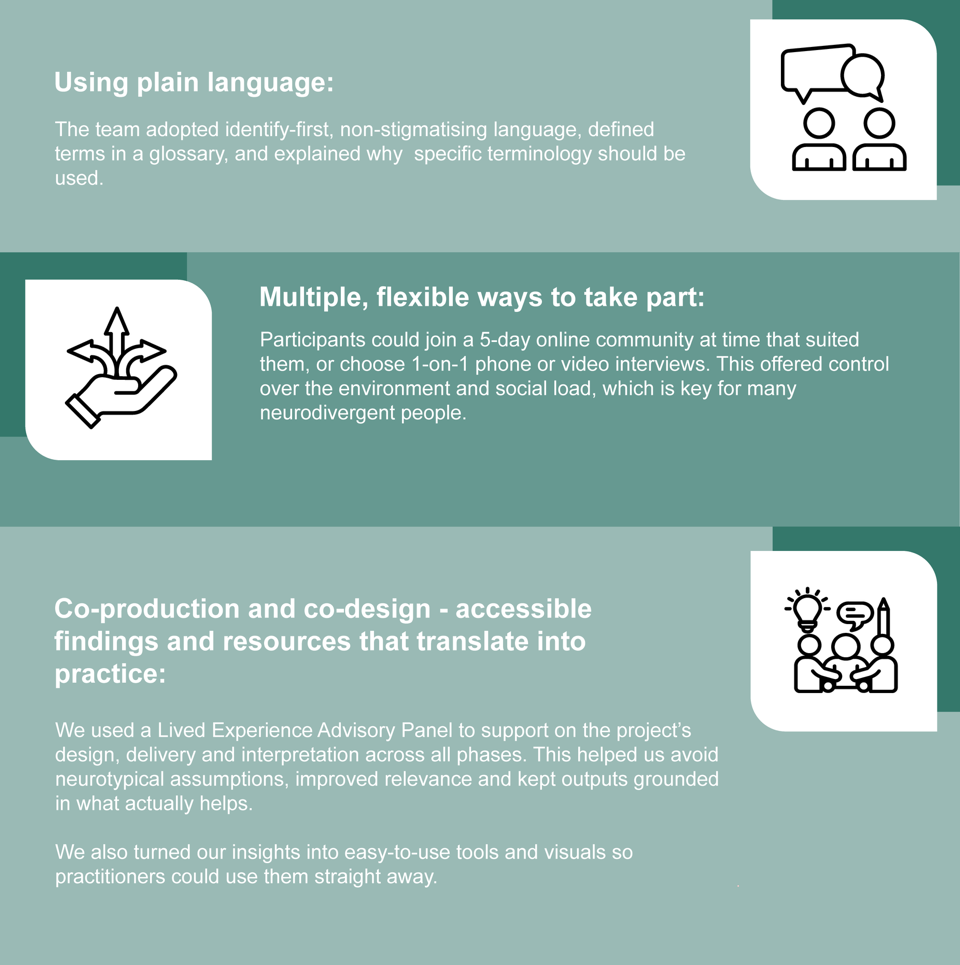
We explored how gambling and gambling harms were experienced by neurodivergent people for our co-design and co-production blog. Here, we return to that research to highlight how accessibility was also embedded throughout the project, shaping how people could take part, engage with materials, and use the final outputs.
Sensitive and inclusive approaches for dementia post-diagnostic support
Evaluation for the Scottish Government
We were tasked by the Scottish Government to provide evidence on the effectiveness and impact of Scotland’s Dementia Post Diagnostic Support (PDS) – including on those living with dementia and their care partners or unpaid carers – to help inform future practice development.
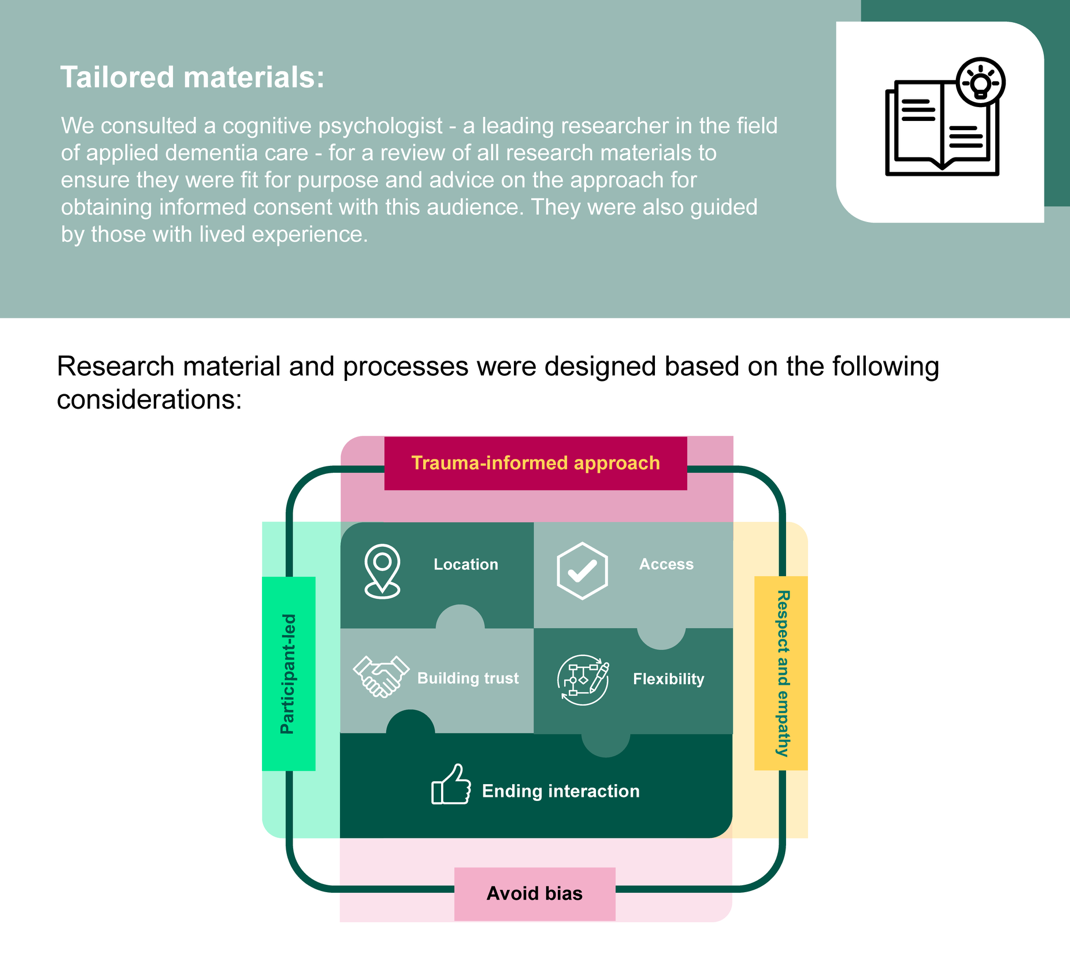
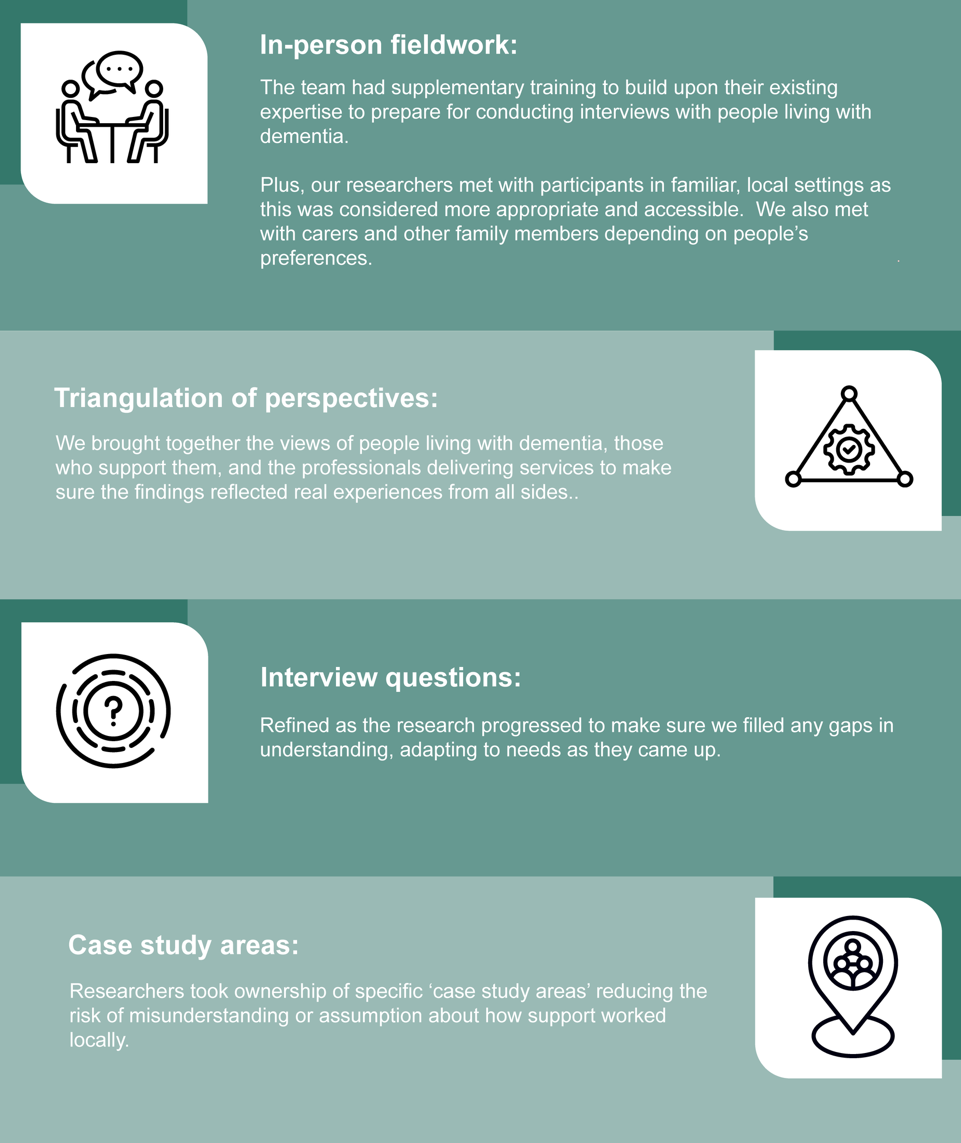
As dementia can affect how people process and engage with information, we wanted to make sure that our approach was carefully considered:
Melanie Mackay, Research Manager at IFF:
Conducting in-person fieldwork with people living with dementia and the people supporting them was a very enriching experience. I heard first-hand accounts of how PDS has impacted these people’s lives for the better. It was inspiring to see many of these people looking ahead with positivity, intent on making the best of their situation. I met a woman living with young, onset dementia whose story was particularly affecting. And, an unexpected benefit was getting a sense of how passionate and exceptionally competent all of the staff were at the site I visited.
Next in focus
Implementing accessible practice should be a key consideration for every research project, as even small adjustments or changes can make a significant difference to the experience and insight of seldom-heard voices.
Next, we’re looking at informed consent, and how taking the time to obtain consent in ways that are clear, respectful and appropriate to different needs can help build trust, confidence and a sense of safety for those taking part in research.