It’s hard to imagine our working lives without technology, and increasingly, AI. But making the most of these tools isn’t just about what they can do – it’s about knowing when to use them, when to trust our own thinking, and when to switch off. So what does that balance look like for someone whose role revolves around AI and automation?
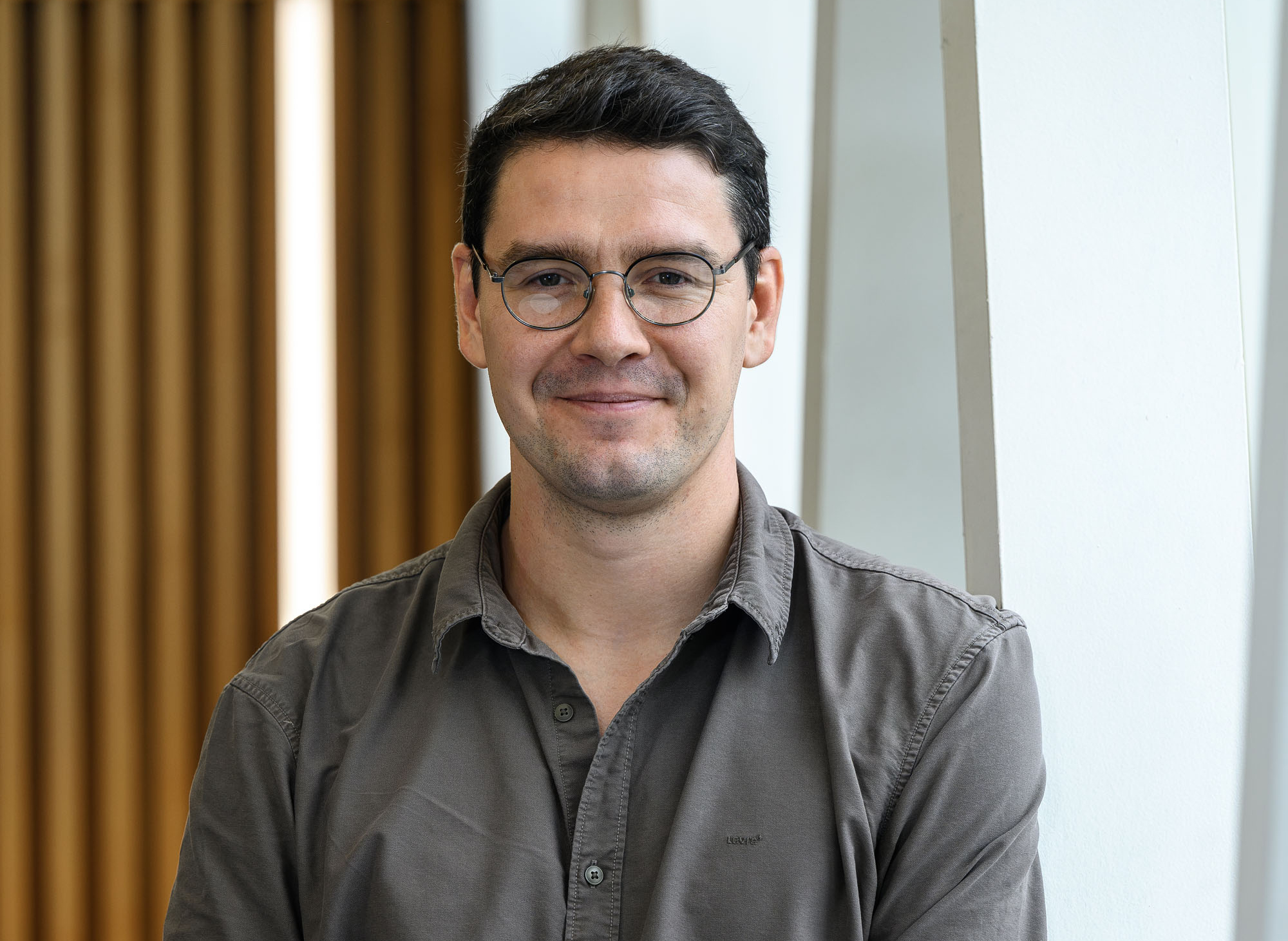
To explore that balance, we caught up with Ollie Gooding, IFF’s AI and Automation Lead, as part of our day in the life series.
Could you tell us how you got into research originally?
I spent a few years teaching (Science PGCE) and delivering NGO work in Uganda and Colombia in my early 20s. I really enjoyed running a Participatory Action Research project in Colombia, involving local people in the design of projects aimed at helping them, which convinced me social research could be a great career. When I got back I applied to IFF’s trainee programme, before working my way up. After a few years at IFF I left for a short stint at Ipsos but then came back in 2023 because I felt IFF’s workplace culture, especially socially, was something I missed.
Could you tell us a bit about what you do? And how you ended up doing it?
As AI and Automation Lead I split my time between working on company-wide initiatives (mostly AI-powered software that researchers can use to deliver work more efficiently), and delivering bespoke AI/automation solutions into projects (such as web scraping, data merging, content analysis).
I’ve slowly moved from doing this part time to full time over the last 3-4 years. I started out on this path by following my interests in web development and python coding in my spare time, and starting to apply those skills to some common processes we follow in research- for example sample cleaning, data joining/merging, and statistical significance testing. When ChatGPT arrived at the end of 2022, the scope of coding projects I could work on massively expanded and I started looking at more ambitious automations like automated charting and building AI into applications. I soon found I could quickly build things that were useful to other researchers, like the IFF Chatbot.
What does a typical day and schedule look like for you? Runs us through the full routine.
I’ve been mostly remote for the last couple of years – and will tend to commute only if there’s key meetings where collaboration is important (about once a week for me). As I no longer work on projects which have a several small deadlines a week, I try to structure my time by looking at the key priorities at the week/month level, then allocating a couple of those per day.
When I worked as a research manager I used to closely time-block my day, but I find that because now I am either trying to work uninterrupted for long stretches, or reacting to incoming requests, managing energy is more important. I try to get to the gym and meditate most days, and always go for a couple of walks to come back to my next task refreshed.
Can you talk us through a recent task where AI or automation made a real difference – what was the challenge, and how did you approach it?
There’s lots we’re doing at the moment that would have been virtually impossible a couple of years ago. These are mostly tasks where you don’t need a huge amount of judgement, but you want to make that judgement thousands of times. There are two recent examples of this. One client asked us to merge more than 10 years of survey datasets where the questions have changed a little every year. That’s thousands of decisions about how questions match up to each other that previously would have taken weeks of manual work, done in a few hours. Similarly, a different client asked us to find specific information about courses offered by private training providers from their websites – previously someone would have to click through and read all the webpages, now AI does it for us.
When you use AI in research, what checks and balances are important?
We’ve developed a set of thoughtful policies around AI usage at IFF, aligned with our key principle of being human first. There are clear guidelines about what you should and shouldn’t share with a tool from a data governance perspective, but it’s also important to consider the human angle. I wrote about this in a recent blog if anyone is interested in learning more.
How do you use tech and AI day-to-day?
I’ve been working with AI all day long for almost two years now – and my output and impact would decline enormously if I couldn’t use it – but that’s because a lot of what I do is now software focused. Outside of writing code, I try to ensure I don’t default to asking AI about problems that I ought to grapple with myself – using it as a critical friend rather than a crutch, though I do sometimes give in to the temptation.
What’s the most rewarding part of your job?
When I get feedback from colleagues about various bits of software I’ve built, telling me it’s saved them time or come in handy. Also working on projects involving tech-led solutions that we would never have bid for even 12 months ago.
What’s your go-to if you need to get in ‘the zone’ for some focus time?
For me it’s about managing energy. Arriving at your desk feeling calm, grounded and ready to focus. That’s mostly about what you do before you sit down, and is usually easier first thing in the morning before your head is filled with the many tasks of the day. Then having a system to deal with inbound tasks so they don’t take up bandwidth when they’re not meant to – I’ve always liked a (much simplified) version of GTD.
How do you unwind after a busy day?
Depends on the day. Most nights it’s a quick walk, a nice dinner, and chill on the sofa. If I’m in town towards the end of the week it might be down the pub with a friend or colleague.