
In this edition of Principles in practice, we’re looking at informed consent: what it is, why it’s important, and how it helps keep social research ethical, safe and respectful.
We should only collect information from (or about) people when they understand what the research is for, what we’re asking them to do, what we will do with the information and if they’ve voluntarily agreed to take part.
That matters because good, reliable research runs on trust. People are more likely to share useful, honest insight when they feel more informed and in control, especially if they’re sharing experiences, views or information about difficult circumstances or sensitive parts of their lives.
Rights and harm reduction
Ultimately, informed consent is about rights. Participants have the right to know what they’re going to be involved in and the right to know how their data is going to be used. Without these rights, research becomes extractive or exploitative, people are more likely to disengage (or self-censor), and anything we’ve potentially learnt has far less credibility. If people know what’s going on, it also reduces the risk of misunderstanding or harming participants, making the process itself smoother.
Consent as continuous and adaptable
But what does it actually look like in practice? It’s all very well and good saying that participants should be informed, but how do we make sure that this happens and that they understand?
To answer that question, it’s crucial to first understand that any consent is defined as ongoing. Participants need to be able to withdraw at any stage without hassle, and when appropriate, be reminded that they have that option. Whilst initial consent may have been given, it’s not a decision that’s permanent.
Otherwise, it’s about being clear, flexible and responsible; handling personal data correctly; giving people the option to skip questions or pause; protecting confidentiality and anonymity where possible; taking a trauma-informed approach; and using clear, accessible language.
And, if something does go wrong or someone becomes upset, it helps to have an established plan in place so you can respond quickly and get them the right support.
Common consent mistakes
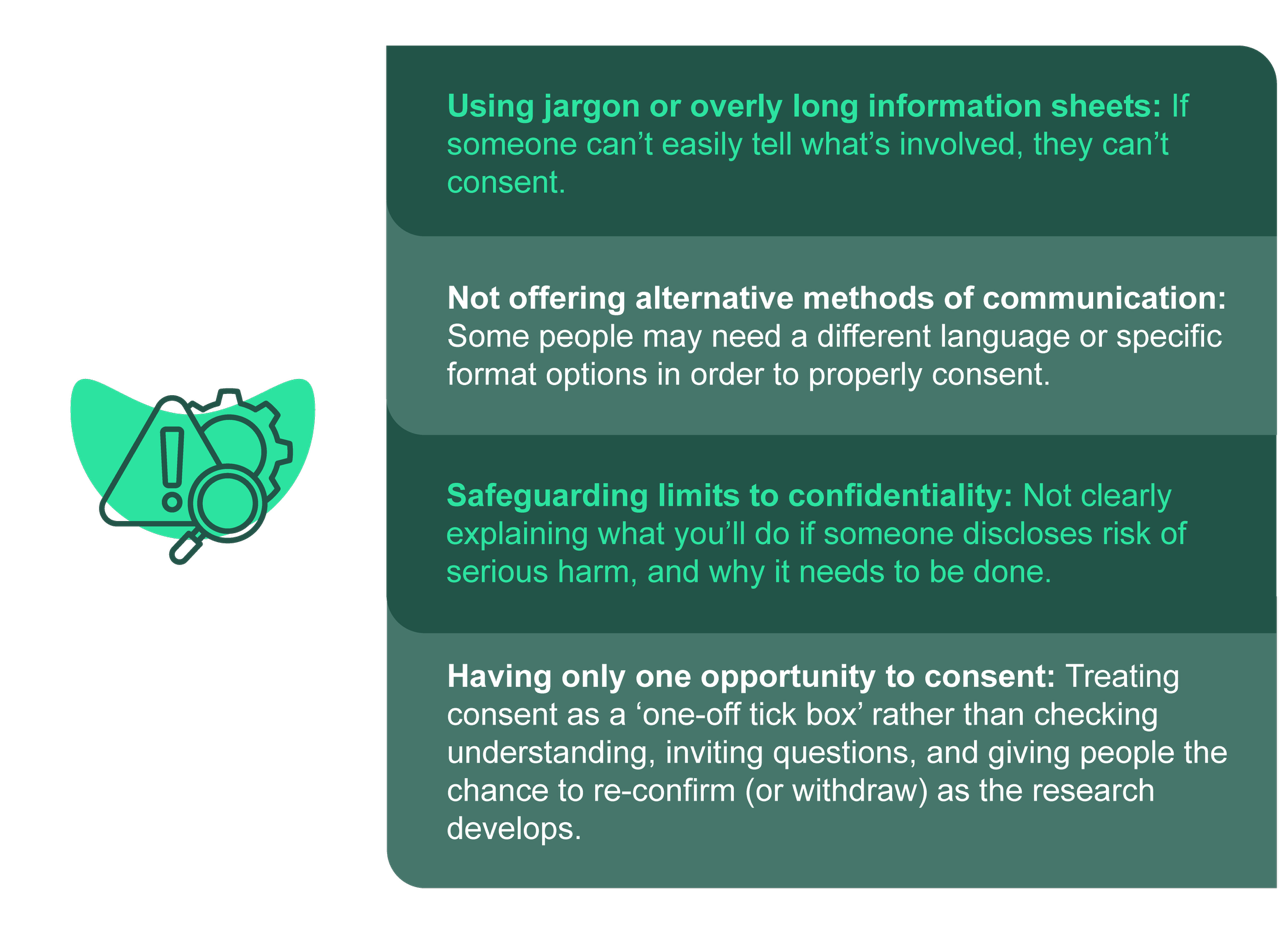
On paper, informed consent can seem simple. But there are pitfalls that researchers can often fall into. Being aware of these can help avoid unnecessary confusion or issues:
How it works: ethical participation in action
The best way to see how informed consent supports quality research practice is to look at how it’s been included across our different projects. Below, we’ll use two examples: evaluating dementia post-diagnostic support for the Scottish Government, and research for the Greater London Authority (GLA) on drug and alcohol misuse.
Thoughtful approaches to dementia care research
Assessing post-diagnostic support for the Scottish Government
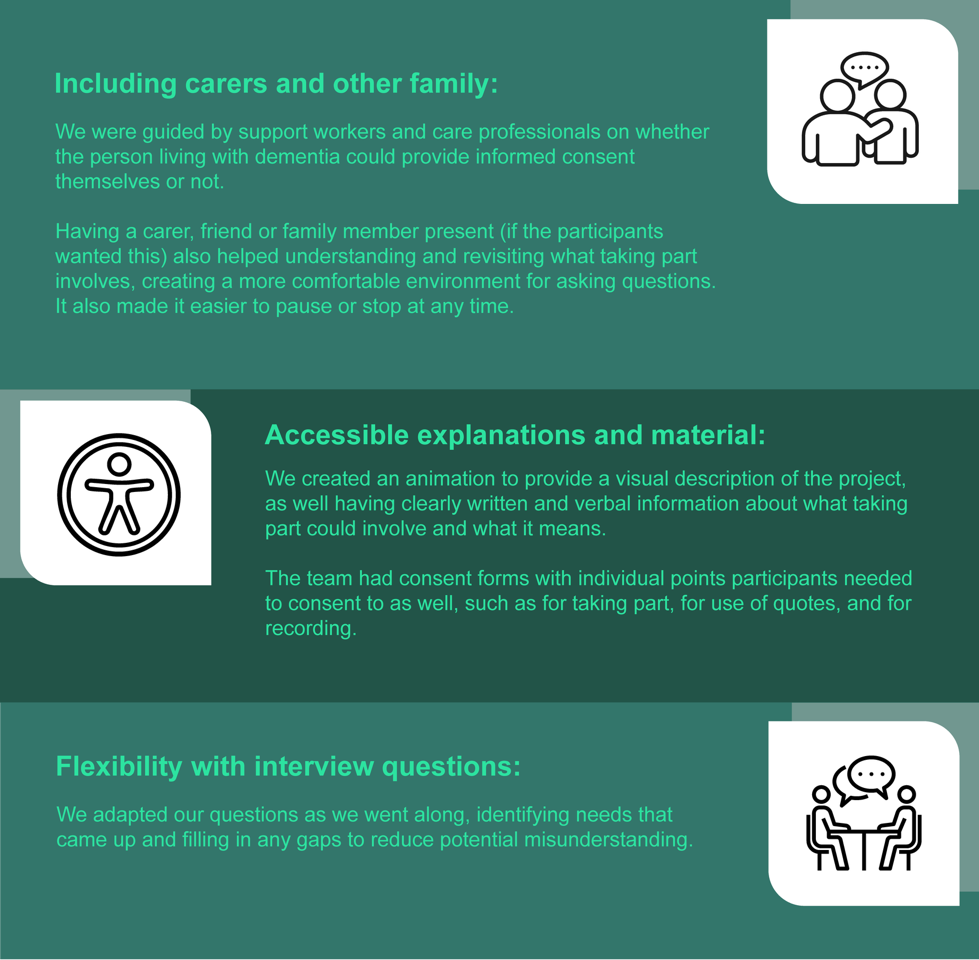
We’ve previously explored this project by looking at how we made research material more accessible. It was just as challenging to make sure consent is genuinely informed and freely given, especially when dementia may affect how someone takes in, retains or revisits information. With this in mind, we used:
Building trust with people in challenging circumstances
Mapping needs and improving support access for non-UK nationals who were rough sleeping with GLA
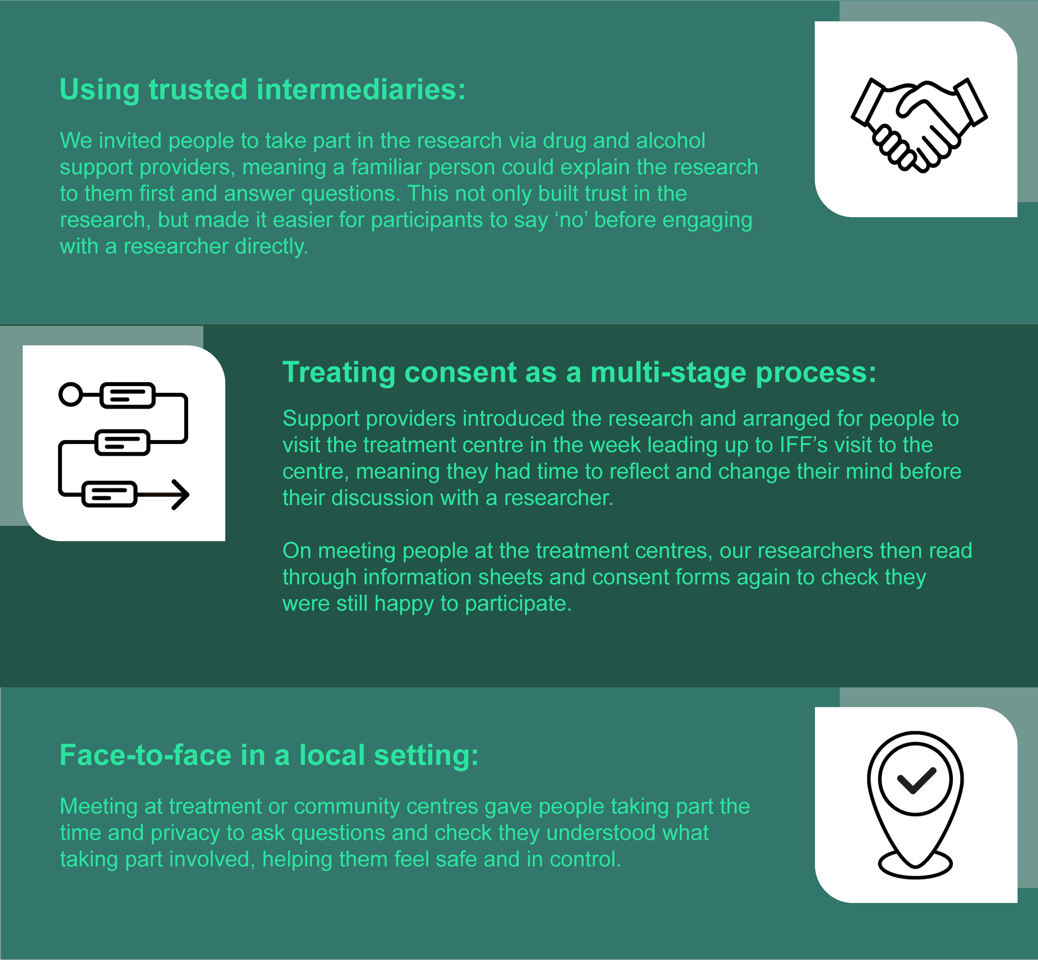
When research covers topics that involve stigma, informed consent is crucial. In our work for the GLA, this was especially important because we were speaking with non-UK nationals that were not only experiencing rough sleeping, but also facing challenging circumstances linked to drug and/or alcohol misuse.
From informed consent to cultural sensitivity
Informed consent is what makes participation safe and fair: people know what to expect, they have autonomy, and we handle what they share responsibly.
The last blog coming up in the series looks at cultural sensitivity. We’ll look at why taking the time to understand different cultural contexts, communicating in accessible ways, and making the participant experience respectful and relevant is key to building a more concrete understanding of whatever’s’ being explored.
You can also read our previous blog on how to research accessible.